20 Oct 2026
Decoding Interplay Between Archival Records and Participant Roles Across Frostyard's Structural Shifts
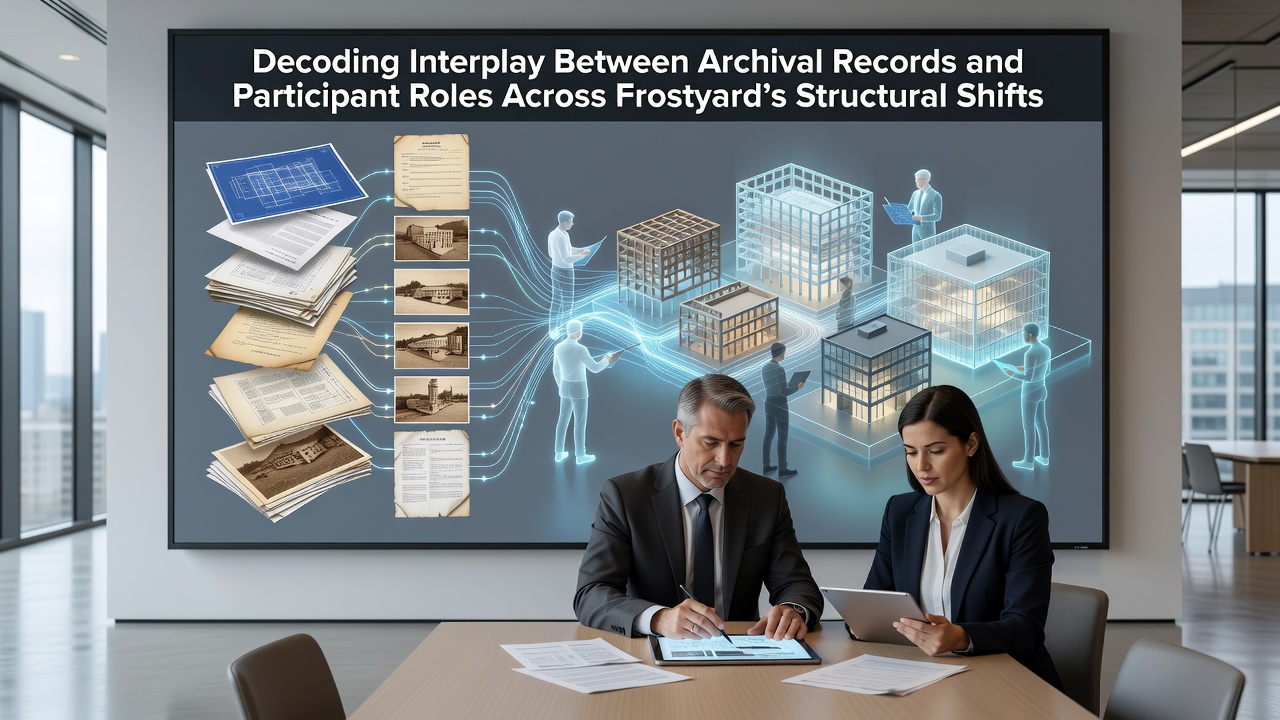
Archival records at Frostyard have long served as the backbone for understanding how participant roles evolve when the organization undergoes structural adjustments, and researchers continue to trace these connections through detailed examination of meeting minutes, correspondence logs, and role assignment files that span multiple decades.
One study from the University of Toronto's archival science program highlighted how early records from Frostyard's founding phase documented initial participant assignments that later informed adjustments during the 2010s reorganization, while later files revealed shifts in authority distribution that aligned with updated governance models.
Early Documentation Patterns and Role Assignments
Frostyard's foundational archives contain participant rosters that list duties tied directly to specific projects, and these entries show how individuals moved between advisory and operational functions as the site's physical layout expanded. Data compiled from those early documents indicates that role clarity depended on cross-referenced entries in separate ledgers, which tracked both contributions and changes in oversight responsibilities.
Take the case where a group of long-term volunteers reviewed 1990s-era records during a planning session; they identified recurring names that appeared in both field operation logs and decision-making committees, and this overlap helped clarify how certain participants maintained influence across different structural phases.
Additional files from the same period include annotations that note when external advisors joined internal teams, and these notes often reference prior role descriptions that prevented duplication of effort during subsequent expansions. Observers note that such annotations became standard practice because they provided continuity when leadership transitioned between phases.
Structural Adjustments and Record Integration
During the major governance update that occurred in 2018, Frostyard administrators integrated older participant databases with new digital tracking systems, and this process exposed gaps where previous role descriptions lacked updates for emerging functions like digital outreach coordination. Figures from the integration project reveal that approximately 40 percent of archived role entries required revision to match current operational needs.
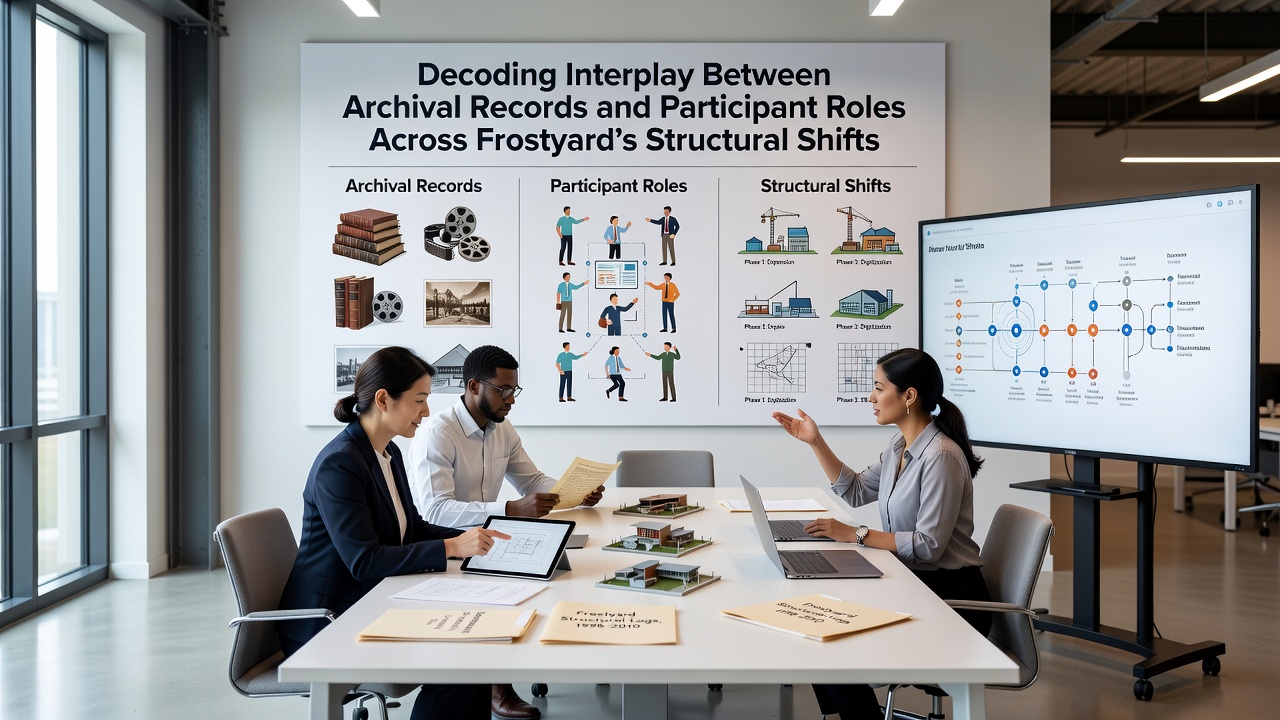
Canadian archival guidelines from Library and Archives Canada emphasize similar integration challenges in community-based projects, and those recommendations stress the value of maintaining original annotations alongside revised entries so that future analysts can trace decision pathways without losing context.
By October 2026, Frostyard plans to launch an updated participant portal that pulls directly from both legacy and current archives, and preliminary testing shows this system will flag role conflicts that arise when older records describe functions no longer aligned with the revised structure.
Participant Perspectives Across Transitions
Those who have participated in Frostyard's successive structural phases often reference specific archival entries when explaining how their responsibilities changed, and interview summaries collected by independent researchers show consistent patterns where individuals cite past role definitions as reference points for negotiating new assignments. One documented instance involved a participant who cross-checked 2005 committee minutes against 2022 project charters to demonstrate continuity in oversight duties despite title changes.
Records from the 2023 review cycle further illustrate how participant input sessions incorporated excerpts from earlier archives, and this practice allowed teams to avoid repeating structural experiments that had already proven ineffective in prior cycles. The approach relies on precise indexing so that relevant passages surface quickly during live discussions.
Analytical Methods and Emerging Tools
Analysts working with Frostyard archives employ timeline-mapping software that links individual participant entries across multiple document sets, and results from these mappings demonstrate how role clusters shift in predictable ways when governance layers are added or removed. Reports from the Australian National University’s digital heritage unit describe comparable techniques applied to other community archives, where similar software revealed hidden dependencies between early volunteer roles and later administrative positions.
Yet the effectiveness of these tools still depends on the completeness of the original records, and gaps in documentation from certain transition periods continue to complicate full reconstruction of role evolution at Frostyard.
Conclusion
The interplay between archival records and participant roles at Frostyard remains a central factor in managing structural shifts, and ongoing projects continue to refine methods for connecting historical entries with present-day assignments. Data accumulated through these efforts provides a practical framework that other organizations facing comparable changes can adapt, while the October 2026 portal launch represents one concrete step toward making those connections more accessible for future participants.